


A narrative synthesis of neuroimaging and causal evidence.
Decision neuroscience has substantially progressed in portraying the neural systems underlying value-based choice. A core finding is that the brain represents subjective value in a network often implicating the ventromedial prefrontal cortex (vmPFC) and ventral striatum, regions tracking expected reward across diverse contexts (Rangel et al., 2008). Reinforcement learning models provide a computational framework for how this network learns from experience, with dopaminergic reward prediction error (RPE) signals updating stored values of stimuli and actions (Schultz et al., 1997). This framework has successfully explained behaviour in non-social contexts, yet its application to social decision-making remains contested, particularly when outcomes involve trade-offs between self-interest and social norms.
Social Choices: Same or Distinct Valuation Mechanisms?
The central debate concerns whether social choices use the same or distinct valuation machinery. Beyond this common-currency versus domain-specific framing, the literature also separates questions about norm learning, affective salience and control under conflict, which often recruit overlapping circuitry but differ in the computations assumed (Ruff & Fehr, 2014). The ‘common-currency’ hypothesis proposes that subjective value is represented in a domain-general network comparing disparate outcomes on a single scale (Levy & Glimcher, 2012), whereas the ‘domain-specific’ position argues that social choices recruit specialised circuitry, including the anterior insula and cingulate regions implicated in unfairness paradigms.
This tension is heightened by methodological challenges. Many neuroimaging studies rely on correlational data, making it difficult to distinguish regions representing fairness from those reflecting uncertainty, cognitive control, or general arousal. The problem of reverse inference, where activation in a region is taken as evidence for a specific cognitive process, is significant (Poldrack, 2010). A rigorous approach should prioritise causal evidence from lesion and stimulation studies, which can rule out alternative explanations. Understanding this computational architecture is clinically and politically important, informing interventions for social decision-making deficits and the design of fair resource allocation systems.
For conceptual clarity, ‘fairness processing’ is defined here as the neural response to the full spectrum of resource distribution, from equal to unequal, measured experimentally by observing how participants respond to both fair and unfair offers in the Ultimatum Game (UG) and how they value transfers that alter the gap between themselves and others (Sanfey et al., 2003; Fehr & Schmidt, 1999; Tricomi et al., 2010). ‘Reward-risk processing’ refers to computations supporting choice under uncertainty, including expected value, RPE, risk as outcome variance and ambiguity (Schultz et al., 1997; Hsu et al., 2005; Preuschoff et al., 2006; Daw et al., 2011).
This narrative synthesis addresses the question: Is processing fairness and reward-risk prediction related in the human brain? Three candidate links are evaluated: (1) shared machinery for valuation and choice; (2) shared signalling of aversion or uncertainty; and (3) shared learning computations applied to social information. The evidence, when weighed by its ability to constrain mechanism, points towards a hybrid model where a core valuation network is modulated by distinct systems for aversion, social cognition, and cognitive control. This constrained hybrid architecture provides a more nuanced account of the data than either the common-currency or domain-specific models alone.
Methods
Selection process
1: Database searches
Systematic searches were conducted in PubMed, Web of Science, PsycINFO, and Scopus in November 2025. Keywords indexed three domains: fairness (ultimatum game, inequity aversion, fairness, social preference), reward-risk (reward, prediction error, risk, ambiguity), and methods [fMRI, lesion, transcranial magnetic stimulation (TMS)]. The Boolean structure combined these domains: (“ultimatum game” OR “inequity aversion” OR “fairness”) AND (“reward” OR “prediction error”) AND (“fMRI” OR “lesion” OR “TMS”). Searches were restricted to title and abstract fields, English-language articles, and human or non-human primate subjects. No date restrictions applied.
2: Screening and eligibility criteria.
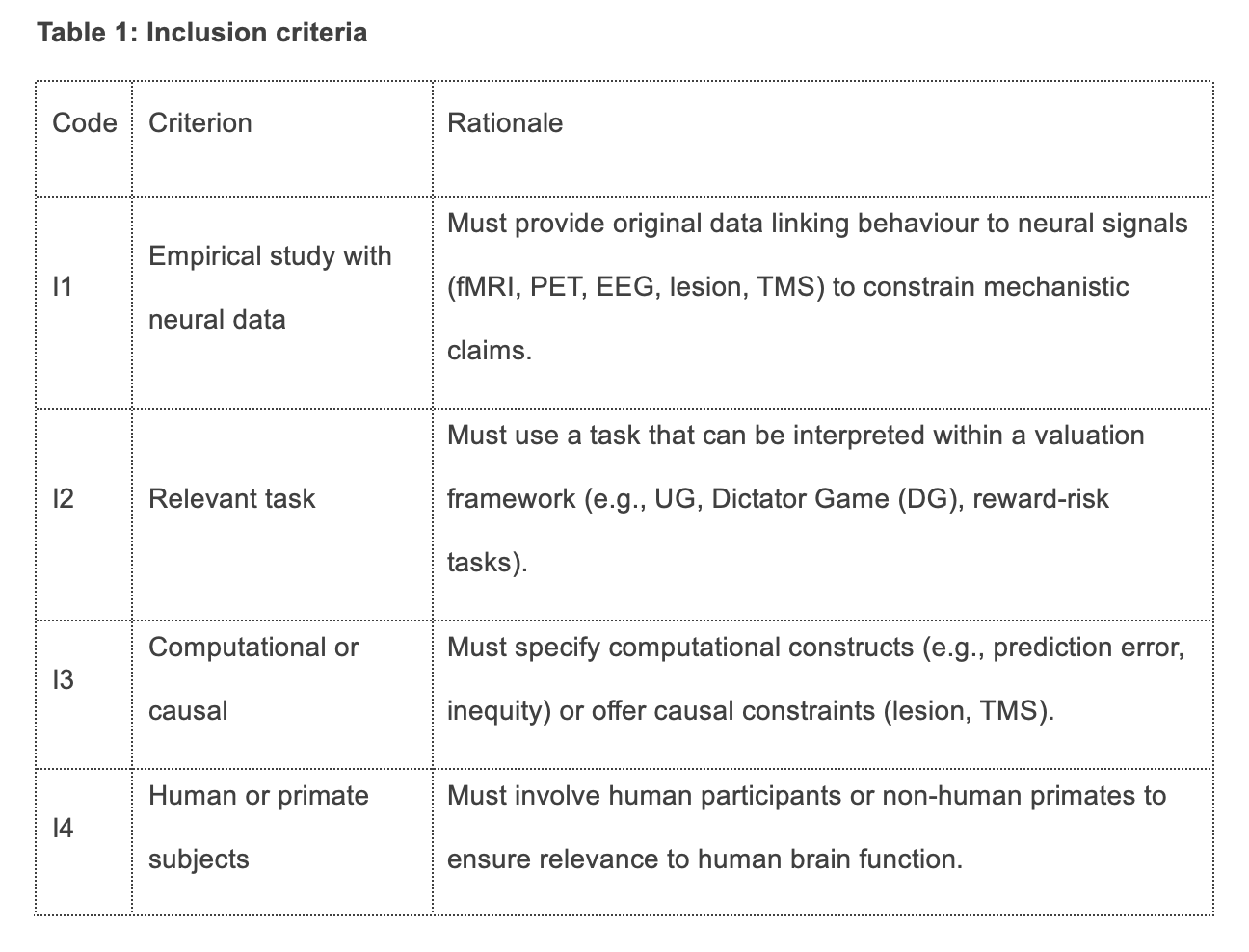
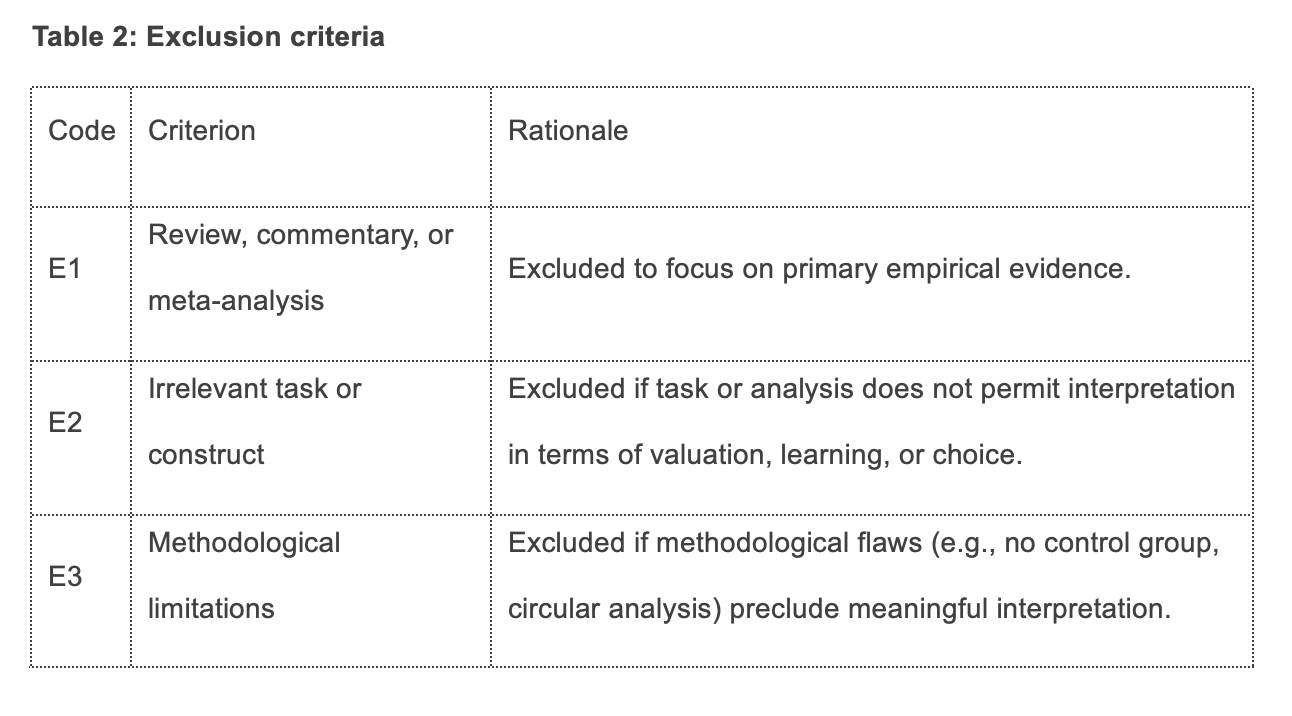
This initial screening yielded 83 unique articles. Studies were included if they met the criteria outlined in Table 1 and excluded if they met any of the criteria in Table 2. After title and abstract screening by a single reviewer, 39 articles were retained for full-text review.
3: Citation searching
Backward and forward citation searching was conducted to identify additional eligible papers.
4: Final included studies
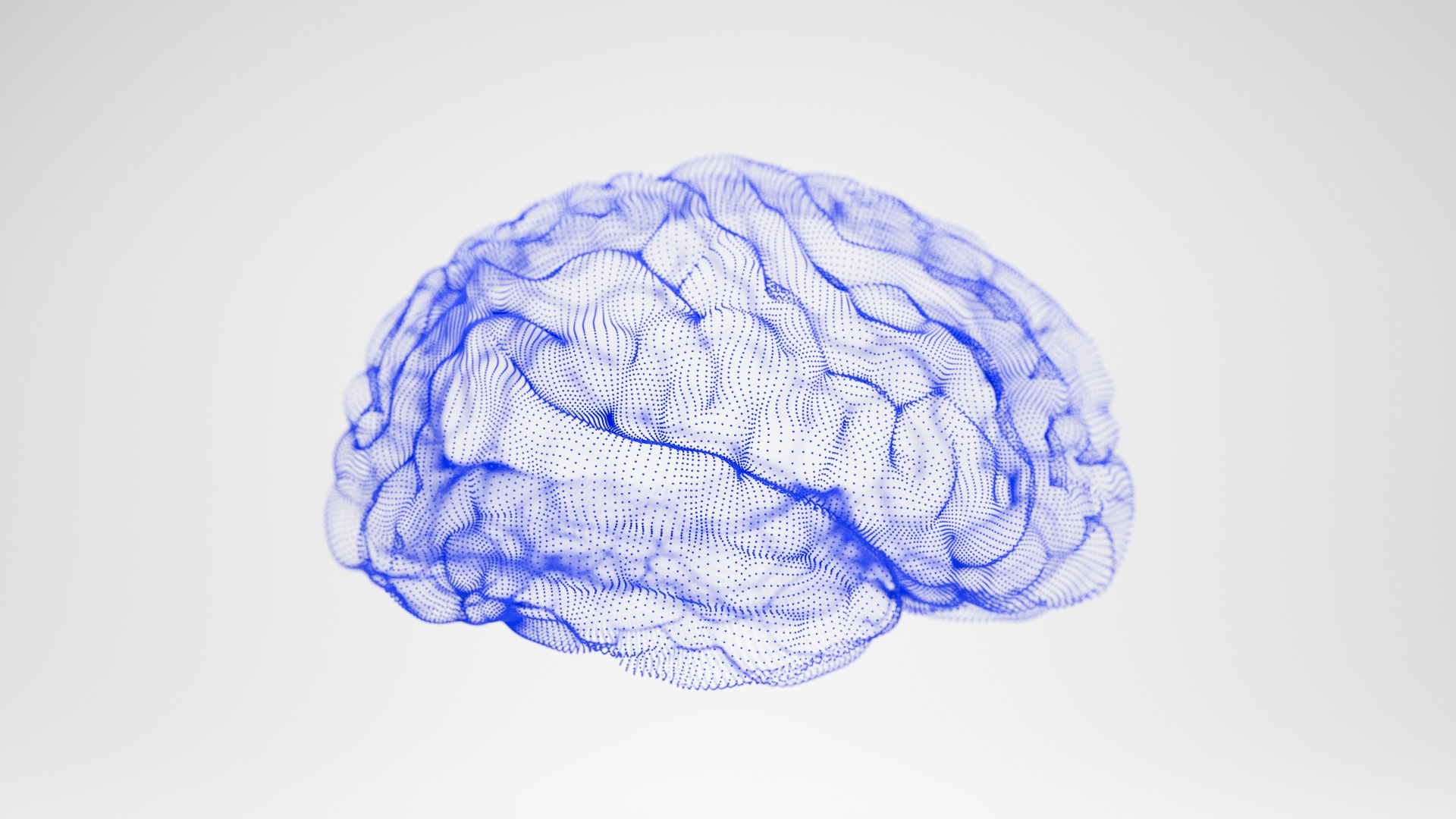
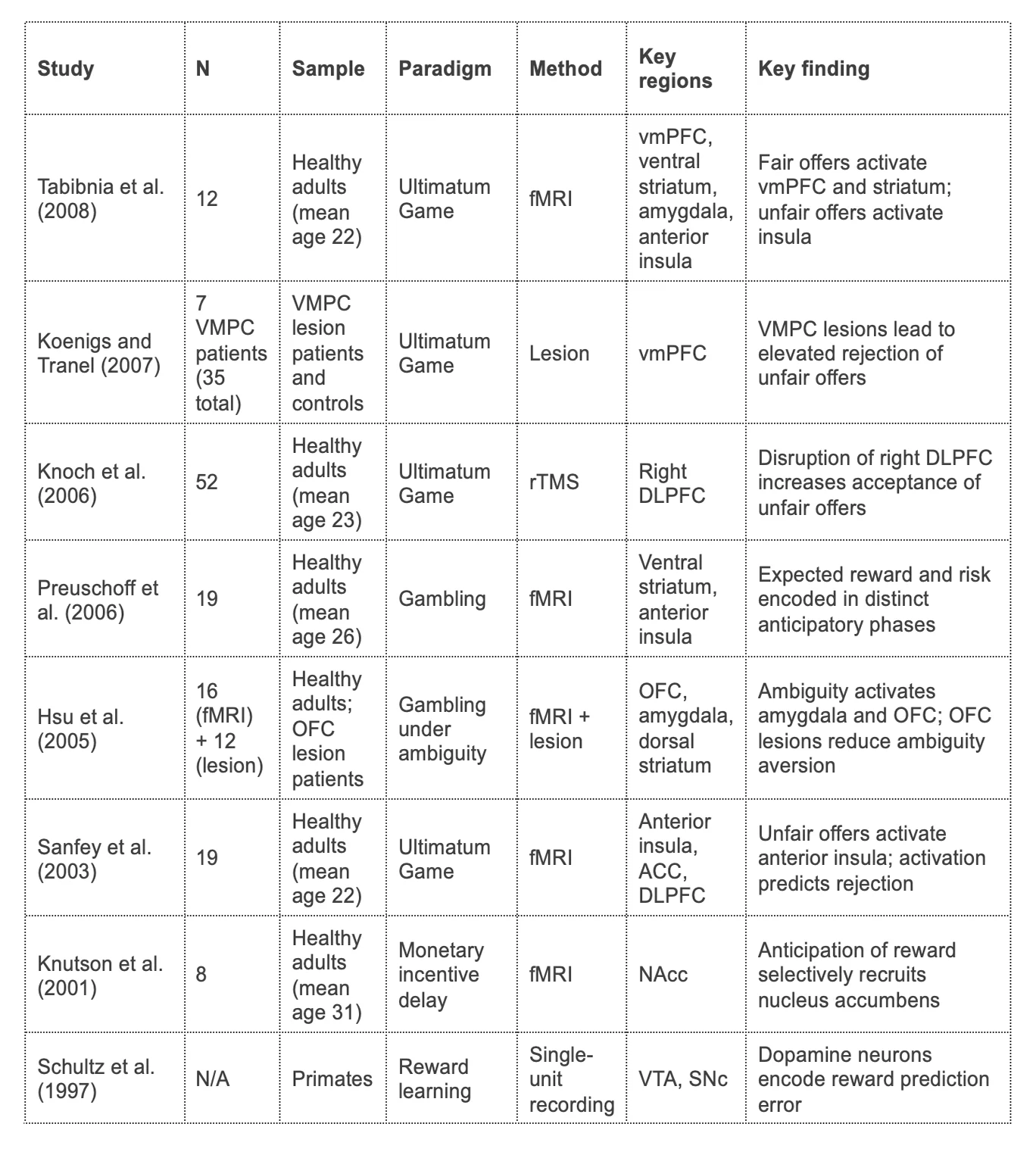
Following full-text review, 16 empirical studies were selected for inclusion in the synthesis, in line with the specified cap on included studies and the aim of prioritising inferential specificity over breadth. To reduce selection bias, eligibility decisions were revisited and checked against the inclusion criteria to ensure consistency. Studies were excluded at this stage if they were redundant with a more methodologically rigorous study addressing the same question, defined here as higher N and either computational modelling with trial-wise regressors or causal evidence (e.g., a smaller fMRI study superseded by a larger replication with computational modelling). The characteristics of included studies are detailed in Table 3.


Synthesis and integration
Quality appraisal
Ethics
TMS studies require additional safeguards given direct brain stimulation: seizure history screening, exclusion of participants with neurological conditions, stopping rules for adverse events, and monitoring during and after stimulation. Ethical adequacy depends on these procedures being documented; Knoch et al. (2006) do not report them explicitly in the published report, preventing verification of compliance.
For lesion studies, capacity to consent is a concern, given that participants have brain damage potentially affecting decision-making. Ethical adequacy depends on capacity assessment and appropriate exclusion criteria. Koenigs and Tranel (2007) addressed this by excluding patients with dementia and psychiatric disorders, while Nitsch et al. (2021) excluded patients with severe cognitive impairment and aphasia, providing documented capacity safeguards. Several studies employed deception (presenting predetermined offers as real); Nitsch et al. (2021) explicitly report debriefing, although other studies do not.
The primate study (Schultz et al., 1997) involved invasive single-unit recordings requiring surgical electrode implantation. Ethical adequacy for such procedures depends on justification under the 3Rs framework: replacement, reduction, and refinement. The paper includes no explicit 3Rs reporting, reflecting standards of the era; this limits verification of ethical safeguards.
TMS studies require additional safeguards given direct brain stimulation: seizure history screening, exclusion of participants with neurological conditions, stopping rules for adverse events, and monitoring during and after stimulation. Ethical adequacy depends on these procedures being documented; Knoch et al. (2006) do not report them explicitly in the published report, preventing verification of compliance.



Results
1: Neural correlates of fairness and unfairness
The seminal fMRI study of the UG reported that unfair offers elicited greater activation in bilateral anterior insula, dorsolateral prefrontal cortex (DLPFC), and anterior cingulate cortex (ACC) than fair offers (Sanfey et al., 2003). Critically, unfair offers were rejected more often when attributed to humans than a computer, and anterior insula responses were greater for unfair human than matched computer offers, suggesting sensitivity to social attribution rather than payoff magnitude alone. Anterior insula activation also negatively correlated with accepting unfair offers (r = -0.45, P = 0.025, one-tailed), suggesting this region may encode an aversive signal biasing rejection. However, this study’s small sample (N=19) and reliance on subtraction contrasts limit interpretive specificity. The insula activation could reflect unfairness, negative affect, conflict, or arousal, illustrating the reverse-inference problem in neuroimaging.
Tricomi et al. (2010) extended this account by inducing salient inequality between paired participants: one received a $50 bonus (high-pay), the other no bonus (low-pay). Participants rated the appeal of transfers to self and other. In vmPFC and ventral striatum, low-pay participants showed stronger responses to transfers to self than to other, whereas high-pay participants showed the opposite pattern. This group-by-recipient interaction is consistent with inequality aversion: the initial endowment shifts the subjective value of identical transfers depending on whether they widen or narrow the gap. The larger sample (N=40) increases confidence, although the rating task may limit generalisation to active choice. Together, these studies suggest a pattern: while the insula signals the aversive quality of unfairness, vmPFC and striatum encode overall subjective value, implying complementary functions.
Xu et al. (2025) extend the valuation account by dissociating economic and affective violations during norm enforcement using a modified UG (N = 43) with trial-wise expectations for monetary outcomes and emotion (valence, arousal), enabling reward and emotional prediction errors (PEs) to be modelled as predicted minus actual experience. Behaviourally, both reward and emotional PEs predicted rejection, but reward PE was the stronger predictor. Neurally, reward experience engaged the dmPFC, whereas subjective emotional evaluation engaged the bilateral anterior insula. At the multivariate level, reward PE could be decoded via a pattern dominated by the right posterior insula, right ventrolateral prefrontal cortex, and left ACC, and expression of this signature predicted rejection of unfair offers. Punishment decisions also recruited a fronto-insular network (including dmPFC, ACC, insula and inferior frontal gyrus). As emotional PEs are self-report-derived and the evidence is correlational, the findings support separable representations of economic and affective violations during norm enforcement rather than distinct causal computations.
The convergence across these three studies, despite different paradigms and sample sizes, strengthens the inference that fairness processing involves both domain-general valuation (vmPFC, striatum) and domain-salient aversion signals (insula). With respect to the three-candidate links, this evidence supports the first (shared valuation machinery in vmPFC and striatum) and the second (shared aversion signalling in the insula), but does not yet address the third (shared learning computations).
2: Lesion and stimulation studies causal evidence
Causal evidence from stimulation studies provides constraints that correlational fMRI cannot. Knoch et al. (2006) used low-frequency repetitive transcranial magnetic stimulation (rTMS) to disrupt right versus left DLPFC (sham-controlled; N = 52) before responders played repeated UGs. Disrupting the right, but not left, DLPFC substantially increased acceptance of intentionally unfair offers, while leaving fairness judgements unchanged, and thus supporting a dissociation between unfairness valuation and implementation of fairness-related behaviour. Mirroring Sanfey’s human-versus-computer attribution manipulation, Knoch separated human-responsible offers from computer-generated offers, isolating reciprocity-driven punishment from inequity aversion alone. The behavioural effect was pronounced in the human-offer condition but weak in the computer-offer condition, consistent with a role for right DLPFC in implementing reciprocally fair responses rather than inequity aversion per se. Mechanistically, rTMS cannot distinguish whether DLPFC supports rejection by strengthening fairness goals or increases acceptance by weakening the control needed to resist economic temptation; the data nevertheless provide rare causal evidence that the right DLPFC is a control node in fairness-related choice.
Koenigs and Tranel (2007) reported that patients with bilateral ventromedial prefrontal cortex (vmPFC; termed “VMPC” in the original paper) lesions rejected unfair Ultimatum Game offers more frequently than neurologically normal controls and brain-damaged controls, while accepting fair offers at ceiling. This lesion effect provides causal evidence that vmPFC is necessary for economically adaptive choice under social provocation, and it sits in tension with correlational fMRI accounts that associate vmPFC with the subjective value of equitable outcomes (e.g., Tabibnia et al., 2008; Tricomi et al., 2010). The authors attribute the hyper-rejection to impaired modulation of anger or frustration responses to unfair treatment, consistent with the clinical phenotype of vmPFC damage; however, emotion was not measured during task performance, so the affective mechanism is inferred rather than demonstrated. Although the vmPFC sample was small (N = 7), the inclusion of both brain-damaged and healthy control groups strengthens the specificity of the findings. In the terms of this synthesis, the results suggest that vmPFC supports the integration or regulation of affective inputs during valuation, constraining punitive responding when emotional and monetary considerations conflict (Koenigs & Tranel, 2007).
The apparent tension between Knoch et al. (2006) and Koenigs and Tranel (2007) is informative. Disrupting right DLPFC increases acceptance of unfair offers, consistent with a causal role in implementing norm-enforcement responses when a social partner is responsible, whereas bilateral vmPFC damage increases rejection, consistent with impaired modulation of provocation-related affect and reduced integration of competing monetary and emotional considerations. Taken together, the opposing effects support dissociable contributions: DLPFC contributes to the control and implementation of fairness-based choice, while vmPFC appears to support integrating or regulating affective inputs during valuation, constraining costly rejection. Both regions are necessary for typical Ultimatum behaviour, but they act through different computational roles.
Beyond social exchange, vmPFC-adjacent ventral prefrontal circuitry is also engaged in valuation under uncertainty, providing a non-social analogue for how aversive and reward-related signals are weighted during choice. Hsu et al. (2005) characterised neural responses to uncertainty by dissociating risk (known probabilities) from ambiguity (unknown probabilities). In fMRI, ambiguity elicited greater activation than risk in the amygdala and orbitofrontal cortex (OFC), whereas risk elicited greater activation than ambiguity in the dorsal striatum, which also covaried with expected reward. Suggestive necessity evidence came from a small lesion sample (n = 5) with damage overlapping the OFC focus, who were comparatively insensitive to both risk and ambiguity relative to controls. While underpowered, this pattern is consistent with OFC involvement in representing or weighting the aversive impact of informational uncertainty. Relative to this narrative synthesis, it motivates the hypothesis that OFC/vmPFC mechanisms used to value uncertain outcomes may be recruited when unfair offers introduce ambiguity about social intent, while noting that this extension is inferential rather than directly tested.
Nitsch et al. (2021) provided direct lesion evidence for a causal role of the insula in aversion to social inequity. Patients with insula lesions (n = 30) accepted disadvantageously unfair Ultimatum offers more frequently than matched lesion controls (n = 30). Computational modelling indicated that this behavioural shift reflected reduced disadvantageous inequity aversion rather than increased decision noise. These findings provide strong necessity evidence that the insula contributes to the aversive component of unfairness responding, converging with correlational UG fMRI work (Sanfey et al., 2003). A key limitation is anatomical: insula lesions can encroach on dorsal striatum due to shared vascular territory, and the study was not fully powered to exclude striatal contribution; a second limitation is that only disadvantageous inequity was tested.
The convergence of Nitsch et al. (2021) and Sanfey et al. (2003) across causal and correlational methods strengthens the inference that the insula contributes to the aversive response to unfairness. Sanfey et al.’s association between insula activation and rejection propensity is given causal grounding by Nitsch et al.’s finding that insula damage increases acceptance by reducing modelled inequity aversion. With respect to the three-candidate links, this evidence most strongly supports the second (shared aversion signalling); the following section considers whether the insula signal is best construed as risk, aversion, or arbitration.
3: Reward, risk and learning signals in fairness circuitry
The reward-risk literature provides a critical interpretive lens for the fairness findings reviewed above. The anterior insula activation observed in response to unfair offers (Sanfey et al., 2003) and supported by lesion evidence (Nitsch et al., 2021) admits at least three computational interpretations. First, the insula response to unfairness may reflect a risk-like signal: unfair offers do not increase objective outcome variance as in canonical risk tasks (Preuschoff et al., 2006), but they increase the subjective probability of a zero-payoff outcome because rejection becomes more likely. Second, the insula may be signalling affective aversion: the region is consistently implicated in disgust and negative affect, and unfairness may simply be aversive. Third, the insula may serve as an arbitration signal, flagging situations where stored habitual responses (accept any positive offer) conflict with goal-directed fairness norms, thereby recruiting prefrontal control systems. These accounts generate distinguishable predictions: if encoding risk, insula activation should scale with offer variance; if signalling aversion, multivariate patterns should resemble disgust or pain; if arbitration, connectivity with DLPFC should increase when rejection overrides acceptance. Current evidence cannot definitively adjudicate among these accounts, but the Nitsch et al. (2021) lesion data, showing reduced inequity aversion rather than increased decision noise, favour the aversion interpretation over pure risk coding.
Across Behrens et al. (2008) and Daw et al. (2011), the divergence in emphasis is best explained by task demands. Behrens et al. report a dissociation between adjacent cingulate regions (ACCg and ACCs) when learning from social reliability versus reward history, whereas Daw et al. test for model-based influences on choice and striatal prediction errors, challenging a purely model-free account. When applied to fairness, these frameworks converge at the level of hypothesis: norm violations may be construed as contingency changes, with cingulate circuitry tracking deviations from expectation, while the DLPFC supports implementing norm-based rejection over default acceptance, consistent with Knoch et al. (2006) showing that right DLPFC disruption increases acceptance. This section motivates a hypothesis for the third candidate link: shared learning computations can be applied to social information, with cingulate mechanisms tracking deviations from expected social norms analogously to deviations in reward contingencies.
4: Integration of social and non-social rewards
A central issue for common-currency models is whether the vmPFC and ventral striatum encode subjective value across monetary and social domains. Because spatial overlap in fMRI does not guarantee identical computations, convergent evidence across tasks and designs is required to support a shared valuation mechanism. Knutson et al. (2001) showed that anticipation of increasing monetary reward selectively recruits the nucleus accumbens, providing a benchmark for reward anticipatory coding. Izuma et al. (2008) applied this logic to social feedback, reporting ventral striatal activation for both monetary reward and reputation gains, with signal magnitude covarying with subjective value; however, their block design limits trial-wise inference about value computation. Tabibnia et al. (2008) investigated fairness by decorrelating equity from payoff and reported vmPFC and striatal responses to fair offers that were independent of monetary amount, consistent with intrinsic value for fairness, but the small sample and reliance on contrast-based inference constrain generalisability. Notably, Tabibnia et al. also observed insula engagement for unfairness, suggesting that negative social meaning is expressed via aversive or conflict-related channels rather than solely as reduced vmPFC value. Context sensitivity is further supported by social comparison. Bault et al. (2011) showed that relative outcomes modulate vmPFC and striatal responses to identical rewards, indicating that valuation depends on social reference frames. Li et al. (2022) refine the common-currency account by showing that prosocial motives, including efficiency, inequity aversion and compassion are represented in overlapping but dissociable patterns across vmPFC, temporoparietal junction (TPJ) and anterior insula, implying integration of multiple preference components during choice.
Taken together, these findings are consistent with the first candidate link: vmPFC-striatal circuitry tracks value across social and non-social domains, but the relevant value signal appears context-dependent, with fairness modulating valuation inputs rather than simply contributing noise (Bault et al., 2011; Izuma et al., 2008; Knutson et al., 2001; Li et al., 2022; Tabibnia et al., 2008).

Evidence quality summary
Discussion
Core inference: shared integration, heterogeneous inputs
Ethical considerations varied by method. For fMRI, approval requires MRI safety screening, informed consent, and data protection protocols. Ethics reporting varied across the included studies. Koenigs and Tranel (2007) explicitly report institutional ethics approval and informed consent. Earlier studies (Sanfey et al., 2003; Tricomi et al., 2010) were published before explicit ethics statements became standard; while leading journals typically require Institutional Review Board approval, the absence of explicit reporting in these papers limits appraisal of ethical adequacy.
Aversive inputs: the role of the insula
The anterior insula is consistently activated in response to unfairness (Sanfey et al., 2003), while vmPFC and ventral striatum track the positive value associated with fair treatment (Tabibnia et al., 2008). Causal evidence from Nitsch et al. (2021) further supports a contributory role of the insula in inequity aversion, as insula lesions reduce aversion to social inequity. Here, ‘risk’ refers to formally manipulated variance or ambiguity, and any mapping from UG unfairness to risk is treated as an analogy rather than an equivalence. The anterior insula may provide an aversion or salience-related input that is also recruited in variance-based risk paradigms (Preuschoff et al., 2006). Across fairness tasks and variance-based risk, the insula appears to contribute a negative salience signal that can bias valuation, although task specific computations remain unresolved.
However, the specificity of this signal remains open. The insula is also implicated in interoception, disgust, and autonomic arousal, and may reflect general negative affect rather than unfairness-specific computation. Future work using multivariate pattern analysis could test whether insula activation patterns for unfairness are similar to, or separable from, patterns evoked by other aversive and high-arousal states.
Learning signals
The third candidate link concerns shared learning computations. Evidence here is more limited and currently supports a plausible computational analogy rather than direct demonstration. Behrens et al. (2008) modelled learning about social value, linking ACC activity to volatility estimates and TPJ signals to belief updating about adviser reliability. Daw et al. (2011) offers a useful lens for framing hypotheses about how fairness decisions may recruit both habitual and goal-directed computations, rather than a direct test of fairness per se. These studies suggest a route for testing whether the same learning algorithms, or latent variables, generalise across fairness and reward-risk learning, but direct tests remain a key direction for future research.
A proposed integrative framework
Based on this synthesis, a constrained hybrid architecture is proposed for understanding the neural basis of fairness and reward-risk processing. Subjective value in social exchange is conceptualised as a weighted integration of monetary utility and social considerations, such as deviations from a fairness norm, with context-dependent weights. A testable prediction is that in a modified UG varying monetary value and fairness, activity in the brain’s valuation network (vmPFC, ventral striatum) should track a combined subjective value signal estimated from individual choices, providing a better fit to neural activity and behaviour than models based on monetary value or fairness alone. Expression of this core valuation signal is proposed to depend on inputs from three functional families: aversion-related signalling (anterior insula, amygdala), social inference and mentalising (TPJ, dmPFC), and control and implementation processes (DLPFC, ACC).
This hybrid model provides a more nuanced account than either common-currency or domain-specific positions alone. It offers one lens for interpreting apparently divergent findings from vmPFC lesion studies showing increased rejection of unfair offers (Koenigs & Tranel, 2007) and fMRI reports of vmPFC engagement during fair outcomes. On this account, vmPFC may support integration of affective and social evaluative inputs into a choice value signal, such that vmPFC damage increases the relative influence of aversive responses to unfairness. However, this mechanism is speculative, and alternatives cannot be ruled out, including vmPFC encoding of monetary value or a broader role in emotion regulation. The framework is also consistent with evidence that disrupting the right DLPFC reduces rejection of intentionally unfair offers without altering fairness judgements (Knoch et al., 2006), suggesting that the DLPFC contributes to implementing fairness-based behaviour when it conflicts with self-interest.
The degree to which social inputs dominate the decision variable should vary with task structure. Social reputation recruits striatal responses comparable to monetary reward (Izuma et al., 2008), consistent with social value feeding into valuation circuitry. The model therefore predicts that functional coupling between valuation regions and modulatory inputs will shift with context, and that causal perturbations targeting specific input systems will yield selective behavioural effects.
While laboratory paradigms simplify real-world contexts, the proposed architecture yields testable applied predictions. Clinically, preferential disruption to vmPFC integration versus insula salience should shift rejection thresholds in different directions, suggesting phenotype-specific predictions for replication. This distinction may clarify patterns across lesions, stimulation, and task variants. In allocation and negotiation, making norm compliance explicit may reduce rejection without increasing material value. For decision support, recommendations optimising welfare while ignoring perceived fairness constraints risk predictable non-adherence.
Limitations Limitations
Confidence in the hybrid model depends on four constraints on the evidence base. First, the causal architecture rests on four perturbation studies in the present evidence set (Knoch et al., 2006; Koenigs & Tranel, 2007; Hsu et al., 2005; Nitsch et al., 2021). The claim that the DLPFC contributes to implementing fairness-based rejection derives from a single TMS study, requiring replication with larger samples and converging methods. Second, the tasks are stylised.
The UG involves a single anonymous interaction with no communication, which may inflate insula-related aversion signalling relative to contexts where reputation, reciprocity, or negotiation are possible. The hybrid model’s claim that social cognition modulates valuation could therefore underestimate the weight of mentalising in ecologically richer settings.
Third, samples are overwhelmingly Western, Educated, Industrialised, Rich, Democratic. If fairness norms differ cross-culturally, the weighting of monetary versus social considerations may shift, and the relative contribution of the three modulatory systems may vary. The model’s generalisability beyond Western samples remains untested. Fourth, paradigm heterogeneity limits precision. The UG measures responses to unfair offers from others, whereas inequity paradigms measure responses to relative payoffs. These may engage partially distinct computations and combining them under ‘fairness’ risks conflating separable constructs.
Future directions
Future research should prioritise discriminating tests. First, multivariate analyses can arbitrate accounts: generalisation of a value decoder between non-social and fairness tasks would favour a common-currency account, whereas reliable task-specific representations would support the hybrid model. Second, within-participant model comparison across social and non-social contexts can test whether a shared latent value term explains behaviour and neural responses, ideally using preregistered model spaces. Third, combining computational modelling with causal methods is critical: perturbing TPJ should selectively affect fairness behaviour when mental state inference is required, whereas perturbing lateral prefrontal control regions should reduce the ability to override self-interest under normative pressure. Fourth, developmental and cross-cultural neuroimaging can test when the architecture stabilises and whether input weighting shifts with local norms, clarifying which components are culturally learned versus biologically constrained.
Conclusion
The evidence reviewed indicates that fairness and reward-risk processing show partial convergence in the human brain. A valuation network centred on vmPFC, and ventral striatum tracks subjective value, while additional circuitry contributes context-sensitive signals that shape choice, including insula-linked aversive salience and temporoparietal contributions to social inference.
This pattern is most consistent with a constrained hybrid architecture: a common valuation currency whose expression is modulated by social and affective inputs. The framework clarifies how economic and social information may be combined during choice and motivates targeted tests with clinical and policy relevance, including fairer decision-support design and assessment of atypical social decision-making.
References
Bault, N., Joffily, M., Rustichini, A., & Coricelli, G. (2011). Medial prefrontal cortex and striatum mediate the influence of social comparison on the decision process. Proceedings of the National Academy of Sciences, 108(38), 16044–16049. https://doi.org/10.1073/pnas.1100892108
Behrens, T. E. J., Hunt, L. T., Woolrich, M. W., & Rushworth, M. F. S. (2008). Associative learning of social value. Nature, 456(7219), 245–249. https://doi.org/10.1038/nature07538
Daw, Nathaniel D., Gershman, Samuel J., Seymour, B., Dayan, P., & Dolan, Raymond J. (2011). Model-Based influences on humans’ choices and striatal prediction errors. Neuron, 69(6), 1204–1215. https://doi.org/10.1016/j.neuron.2011.02.027
Fehr, E., & Fischbacher, U. (2003). The nature of human altruism. Nature, 425(6960), 785–791. https://doi.org/10.1038/nature02043
Fehr, E., & Schmidt, K. M. (1999). A theory of fairness, competition, and cooperation. The Quarterly Journal of Economics, 114(3), 817–868.
Hsu, M. (2005). Neural systems responding to degrees of uncertainty in human decision-making. Science, 310(5754), 1680–1683. https://doi.org/10.1126/science.1115327
Izuma, K., Saito, D. N., & Sadato, N. (2008). Processing of social and monetary rewards in the human striatum. Neuron, 58(2), 284–294. https://doi.org/10.1016/j.neuron.2008.03.020
Knoch, D., Pascual-Leone, A., Meyer, K., Treyer, V., & Fehr, E. (2006). Diminishing reciprocal fairness by disrupting the right prefrontal cortex. Science, 314(5800), 829–832. https://doi.org/10.1126/science.1129156
Knutson, B., Adams, C. M., Fong, G. W., & Hommer, D. (2001). Anticipation of increasing monetary reward selectively recruits nucleus accumbens. The Journal of Neuroscience, 21(16), RC159–RC159. https://doi.org/10.1523/jneurosci.21-16-j0002.2001
Koenigs, M., & Tranel, D. (2007). Irrational economic decision-making after ventromedial prefrontal damage: Evidence from the ultimatum game. Journal of Neuroscience, 27(4), 951–956. https://doi.org/10.1523/jneurosci.4606-06.2007
Levy, D. J., & Glimcher, P. W. (2012). The root of all value: A neural common currency for choice. Current Opinion in Neurobiology, 22(6), 1027–1038. https://doi.org/10.1016/j.conb.2012.06.001
Li, Y., Hu, J., Ruff, C. C., & Zhou, X. (2022). Neurocomputational evidence that conflicting prosocial motives guide distributive justice. Proceedings of the National Academy of Sciences, 119(49). https://doi.org/10.1073/pnas.2209078119
Nitsch, F. J., Strenger, H., Knecht, S., & Studer, B. (2021). Lesion evidence for a causal role of the insula in aversion to social inequity. Social Cognitive and Affective Neuroscience. https://doi.org/10.1093/scan/nsab098
Poldrack, R. A. (2010). Mapping mental function to brain structure: How can cognitive neuroimaging succeed? Perspectives on Psychological Science, 5(6), 753–761. https://doi.org/10.1177/1745691610388777
Preuschoff, K., Bossaerts, P., & Quartz, S. R. (2006). Neural differentiation of expected reward and risk in human subcortical structures. Neuron, 51(3), 381–390. https://doi.org/10.1016/j.neuron.2006.06.024
Rangel, A., Camerer, C., & Montague, P. R. (2008). A framework for studying the neurobiology of value-based decision making. Nature Reviews Neuroscience, 9(7), 545–556. https://doi.org/10.1038/nrn2357
Ruff, C. C., & Fehr, E. (2014). The neurobiology of rewards and values in social decision making. Nature Reviews Neuroscience, 15(8), 549–562. https://doi.org/10.1038/nrn3776
Sanfey, A. G., Rilling, J. K., Aronson, J. A., Nystrom, L. E., & Cohen, J. D. (2003). The neural basis of economic decision-making in the ultimatum game. Science, 300(5626), 1755–1758. https://doi.org/10.1126/science.1082976
Schultz, W., Dayan, P., & Montague, P. R. (1997). A neural substrate of prediction and reward. Science, 275(5306), 1593–1599. https://doi.org/10.1126/science.275.5306.1593
Tabibnia, G., Satpute, A. B., & Lieberman, M. D. (2008). The sunny side of fairness. Psychological Science, 19(4), 339–347. https://doi.org/10.1111/j.1467-9280.2008.02091.x
Tricomi, E., Rangel, A., Camerer, C. F., & O’Doherty, J. P. (2010). Neural evidence for inequality-averse social preferences. Nature, 463(7284), 1089–1091. https://doi.org/10.1038/nature08785
Xu, T., Zhang, L., Zhou, F., Fu, K., Gan, X., Chen, Z., Zhang, R., Lan, C., Wang, L., Kendrick, K. M., Yao, D., & Becker, B. (2025). Distinct neural computations scale the violation of expected reward and emotion in social transgressions. Communications Biology, 8(1). https://doi.org/10.1038/s42003-025-07561-7
Neura by Within International
Coming Soon.
Launching December 2026.
Neura by Within International
Coming Soon.
Launching December 2026.
Explore our articles
Original thinkers. Proven creators.

Why are you so sure?

Sentiment AI – The intelligence layer AI is missing

Creative advantage in the age of generative systems

Aligning brand, purpose and strategy – A conversation with Eve Vlemincx | Part 2

Aligning brand, purpose and strategy – A conversation with Eve Vlemincx | Part 1

Discontinuous change and the break with old logic

“Work the heck?”: highlighting the dangers of the UK’s new policies to businesses, international talent and young people.
“Work the heck is going on?” A question everyone in the current job market has asked themselves at one point (and yes, pun intended).

Should digital transformation be applied to enhance tech efficiency in the shipping sector? AI, IoT, digital twins and more.

The science of building brands for the intangible
For years, Within International has specialised in building brands for the hardest thing to define: the intangible.

The case for neuroscience in business

Outside looking in: a call for change in shipping

The city that never sleeps
We usually work in words – but this time, the pictures said it better. A visual story from our recent New York adventure.